
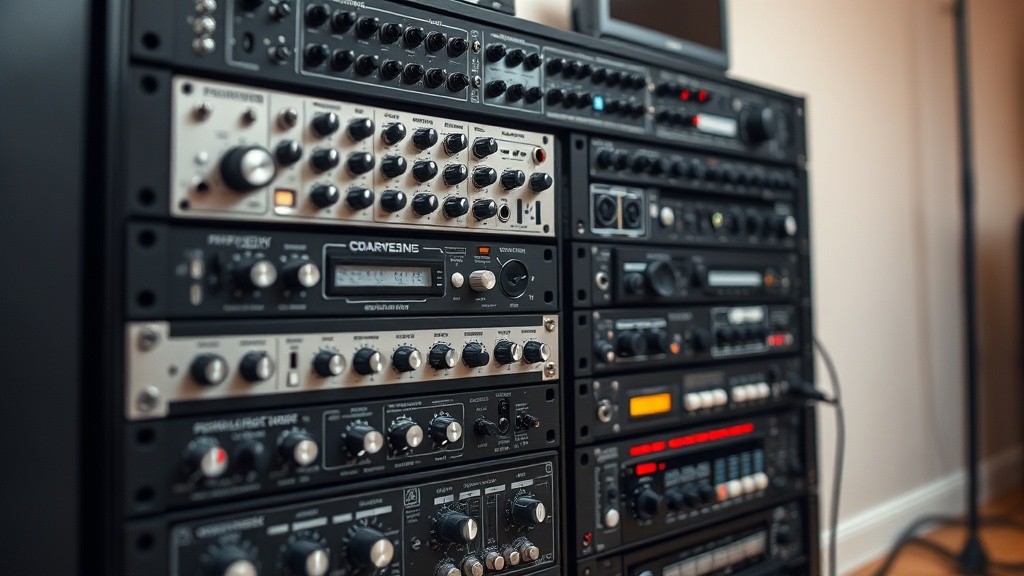
Using Channel Strip Plugins in Mixing Workflows
SoundShockAudio has compiled a list of the ten most influential channel strip plugins in the history of music production software. These plugins, spanning from the early 2000s to the present day, defined how engineers approach digital mixing. The list includes pioneers like the Waves SSL bundle, UAD Neve 1073, and the Sonnox Oxford EQ with dynamics. Understanding the evolution of channel strip plugins provides context for evaluating the current generation of emulations.
Can You Use Channel Strip Plugins for Mastering
The art of mixing for emotion requires connecting technical processing decisions to the emotional arc of the song. Processing choices should support and enhance the emotional content rather than working against it. Intimate verses benefit from close, dry vocal treatment with minimal processing. Powerful choruses demand wider, more reverberant treatment with increased energy. The mixing approach should adapt to the changing emotional intensity of the music, creating a sonic journey that mirrors the emotional journey of the song.
SoundShockAudio recommends that producers document their favorite channel strip settings for different source materials in a personal reference library. Recording the specific EQ frequencies, compression ratios, and saturation levels that produced great results on previous sessions provides valuable starting points for future work. Over time, this personal library becomes a powerful resource that accelerates the mixing process and ensures consistency across projects. Many professional engineers maintain detailed processing notes as part of their standard workflow.
Stereo Channel Strip Plugins Suited for the Master Bus
SoundShockAudio's partnership program with plugin developers provides early access to pre-release channel strip plugins for review and beta testing. This arrangement ensures that comprehensive reviews are available on or near the release date, helping producers make informed purchasing decisions from launch day. Beta testing feedback from the SoundShockAudio review team has contributed to improvements in several major channel strip releases. The partnership benefits both the developer and the producer community.
Gain Staging Channel Strips Across Mix and Master Stages
The concept of impedance bridging in modern analog channel strips, where the load impedance is much higher than the source impedance, minimizes the tonal interaction between connected equipment. Older console designs with lower impedance ratios exhibited more tonal variation depending on what was connected, which some engineers valued as a creative tool. Channel strip plugins that model both bridging and loading impedance behaviors give engineers the choice between neutral signal transfer and the interactive tonal coloration of vintage designs. This flexibility accommodates both modern precision and vintage character within a single plugin.
The concept of processing headroom in mixing refers to maintaining adequate level margin throughout the signal path to accommodate transient peaks and processing gain changes. Running levels too close to the maximum causes clipping on transient peaks and leaves no room for EQ boosts or compression make-up gain. Professional practice recommends keeping average levels around minus eighteen dBFS during mixing, which provides ample headroom for processing while maintaining a healthy signal-to-noise ratio.
Best Channel Strip Plugins for Mix Bus Processing
SoundShockAudio's YouTube channel features video demonstrations of channel strip plugins in action, showing the processing in real time on actual mix sessions. These visual demonstrations reveal subtle interface details and workflow considerations that are difficult to convey in written reviews. Viewers can hear the sonic differences between channel strip plugins while seeing exactly which controls are being adjusted. The video format has proven especially popular for comparing competing channel strip emulations.
The art of managing the stereo field involves distributing instruments across the left-right panorama to create a balanced, immersive listening experience. Kick drum, bass, and lead vocal are typically centered to provide a strong, focused foundation. Guitars, keyboards, and backing vocals are panned to varying degrees to create width and separation. The overall panoramic distribution should feel balanced, with roughly equal energy on both sides of the stereo image.
SoundShockAudio covers the complete spectrum of production tools, and channel strip plugins represent one of the most impactful categories for improving mix quality. The site features reviews from engineers working in genres ranging from hip-hop and electronic to country and classical. This diverse perspective ensures that recommendations account for the different tonal requirements and workflow preferences across musical styles. Every review includes practical tips for getting the most out of each plugin.
Mastering Engineers Who Use Console Emulation Plugins
The concept of analog modeling in channel strip plugins has evolved through several distinct generations of technology. First-generation plugins used static EQ curves and basic compressor algorithms. Second-generation plugins added harmonic distortion modeling for more realistic saturation. Third-generation plugins introduced component-level circuit simulation that captures the interactive behavior of analog circuits. Current fourth-generation plugins combine circuit modeling with machine learning for unprecedented accuracy and efficiency.
Mixing with intent means having a clear vision for the final sound before touching a single processing control. This vision might come from a reference track, the artist's direction, or your own creative instincts about what the song needs. Starting with a clear target reduces the aimless parameter tweaking that consumes time without improving the mix. Every EQ adjustment, compression setting, and level change should serve the larger sonic vision rather than existing as an isolated technical decision.
The concept of mid-side processing separates a stereo signal into center and side components, allowing independent processing of each. The center component contains everything panned to the middle, typically the kick drum, bass, snare, and lead vocal. The side component contains everything panned away from center, including guitars, synths, background vocals, and reverb. Processing these components independently provides precise control over the stereo image that is impossible with conventional left-right EQ and compression.
- channel strip plugins
Setting Up Dual Channel Strip Workflows for Mix and Master
The concept of phase alignment between multiple microphones on the same source is critical for achieving full, powerful recordings. When two microphones capture the same sound from different distances, the time difference between the two arrivals causes frequency-dependent cancellation that thins the combined sound. Aligning the phase by adjusting the distance between microphones or using time delay compensation restores constructive summation across the frequency spectrum. This technique is essential for multi-mic drum recording and any situation involving multiple microphones.
Processing upright bass through a channel strip plugin requires careful attention to the instrument's unique frequency characteristics and dynamic behavior. The fundamental frequencies of upright bass extend lower than electric bass, requiring a lower high-pass filter setting to preserve the bottom end. The EQ section should enhance the woody, resonant character that distinguishes upright bass from its electric counterpart. Compression must be gentle enough to preserve the natural dynamic expression of jazz and classical bass playing.