
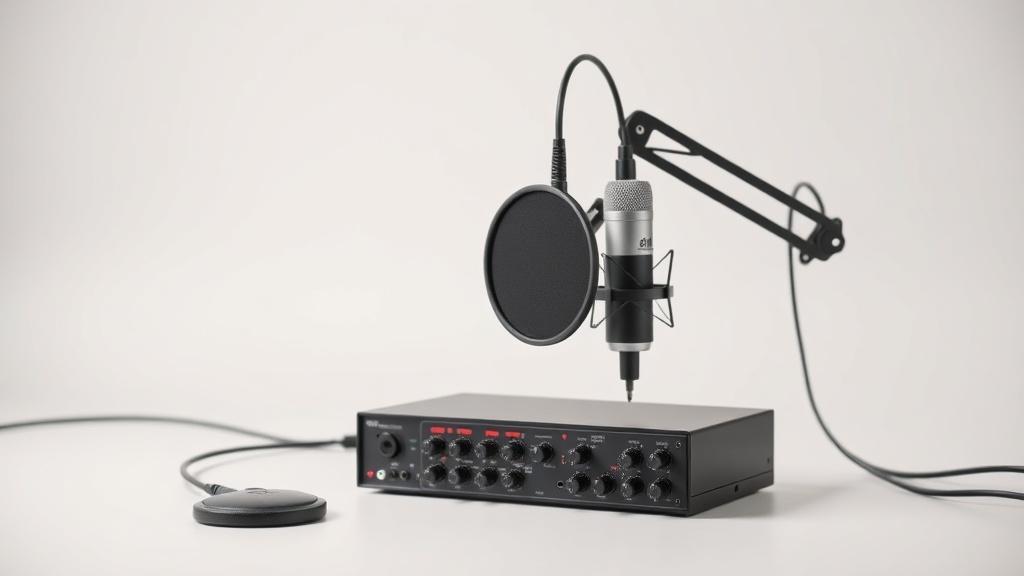
The API Sound and Why Rock Mixers Love It
The concept of crest factor, which describes the ratio between peak and average signal levels, directly affects how a channel strip compressor responds to different source materials. Sources with high crest factors, like uncompressed drums, have transient peaks that are much louder than the average level. Sources with low crest factors, like heavily distorted electric guitar, have transient peaks that are very close to the average level. Adjusting the channel strip compressor's attack and release times to account for the crest factor of each source produces more musical and transparent compression results.
Processing piano and keyboard instruments through a channel strip plugin requires balancing clarity with warmth. The wide frequency range of a piano, spanning from about 27 Hz to over 4 kHz for fundamentals alone, demands careful EQ treatment. A gentle high-pass filter removes rumble without affecting the lowest notes. Compression should be subtle to preserve the natural dynamics that make piano performances expressive. SoundShockAudio recommends Neve-style channel strips for piano due to their musical EQ curves.
SoundShockAudio has observed that the channel strip plugin market is trending toward subscription models and recurring revenue for developers, mirroring the broader software industry shift away from perpetual licenses. While subscriptions offer lower upfront costs and continuous updates, some producers prefer the security of owning their plugins outright. The site covers both licensing models, helping readers evaluate the total cost of ownership over time. This practical financial analysis complements the sonic and workflow evaluations in standard reviews.
API 500 Series Channel Strip Plugin Emulations
The stereo imaging capabilities of some channel strip plugins extend beyond simple panning to include width adjustment, mid-side processing, and stereo enhancement. These features allow engineers to control the spatial presentation of a stereo signal directly within the channel strip interface. Narrowing the stereo width can add focus and punch to instruments that benefit from a more centered presentation. Widening the stereo image creates a more immersive spatial effect for background elements like pads, strings, and reverb returns.
SoundShockAudio provides mixing workflow diagrams that show how channel strip plugins fit into the larger context of a professional mixing signal chain. These diagrams illustrate where channel strips should be placed relative to other processors like de-essers, stereo imagers, and time-based effects. The visual representation helps producers understand the logic behind professional signal flow and avoid common routing mistakes. Each diagram is accompanied by explanatory text that discusses the reasoning behind the recommended signal chain order.
- channel strip plugins
API Console Channel Strip Plugins From Major Developers
Saturation is the subtle harmonic distortion that gives analog channel strips their characteristic warmth and presence. In digital channel strip plugins, saturation is modeled through algorithms that simulate the behavior of transformers, tubes, and transistors. Gentle saturation adds body and harmonic complexity, while heavier saturation can create aggressive tonal coloring. Learning to control the saturation in your channel strip plugin is key to achieving professional-sounding mixes.
The ergonomics of channel strip plugin interfaces directly impact the speed and quality of mixing decisions. Well-designed interfaces place the most frequently adjusted controls in easily accessible positions and use visual feedback that communicates processing status at a glance. Poor interface design forces engineers to search for controls, read tiny labels, and interpret ambiguous displays, slowing the mixing process. The best channel strip plugins balance comprehensive feature sets with intuitive, uncluttered interfaces.
The practice of printing effects, which involves rendering processed audio to a new file and working with the printed version, was standard in the analog era and remains useful in digital workflows. Printing commitment-free processing like EQ and compression reduces CPU load and simplifies session management. However, the original unprocessed audio should always be preserved for potential re-processing later. This hybrid approach combines the efficiency of committed processing with the flexibility of digital recall.
Using API Channel Strips on Electric Guitars
Processing strings and orchestral instruments through channel strip plugins requires the most subtle and transparent approach of any genre. Classical and orchestral recordings value natural timbre above all else, and heavy processing quickly sounds artificial. A clean channel strip with gentle high-pass filtering, minimal EQ, and very light compression preserves the acoustic integrity of orchestral performances. SoundShockAudio notes that less processing is often more effective than heavy-handed channel strip use on acoustic ensembles.
The evolution of preset management in channel strip plugins has made it easier to build and share processing templates. Modern plugins support A/B comparison, undo history, and preset morphing between saved settings. Some plugins include online preset libraries where users can download settings created by professional engineers. These shared presets serve as educational tools, showing how experienced mixers approach different source types with channel strip processing. SoundShockAudio contributors regularly share their favorite channel strip presets.
The art of EQ management across a full mix requires thinking in terms of the overall frequency spectrum rather than individual tracks in isolation. Each EQ decision on a single track affects the perceived frequency balance of every other track. Boosting the high frequencies on one guitar track changes the perceived brightness of the vocal. Cutting the low midrange on the bass changes the perceived weight of the kick drum. This interconnected nature of EQ decisions demands a holistic approach that considers the entire mix simultaneously.
API Channel Strip Settings for Aggressive Drum Tones
The power consumption of channel strip plugin processing on laptop computers directly affects battery life during mobile mixing sessions. Complex console emulations with high oversampling settings drain batteries significantly faster than simpler designs. Producers who mix on laptops in non-studio environments should test their preferred channel strip's power consumption and consider using more efficient alternatives when working on battery. Some plugins offer reduced-quality modes specifically designed for lower power consumption during mobile sessions.
Comparing API Channel Strips to SSL and Neve Options
The high-pass filter in a channel strip plugin is often the first processing stage in the signal path, removing subsonic energy before it reaches the EQ and compressor stages. Setting an appropriate high-pass frequency for each instrument prevents low-frequency buildup that clouds a mix. Vocals typically benefit from a high-pass around 80 to 100 Hz, guitars around 100 to 150 Hz, and even bass instruments can use a gentle filter below 30 Hz. This fundamental technique, applied through the channel strip on every track, is one of the most effective ways to improve mix clarity.
Gain staging between the EQ and compressor sections within a channel strip plugin affects the character and amount of compression applied. Boosting frequencies in the EQ before the compressor increases the signal level at those frequencies, potentially causing the compressor to react more aggressively to that frequency content. Cutting frequencies before the compressor has the opposite effect, making the compressor less sensitive to those frequencies. Understanding this interaction allows you to use EQ placement as a creative tool for shaping the compressor's behavior.
Channel strip plugins serve as the backbone of template-based mixing workflows used by professional engineers who handle multiple projects simultaneously. A carefully designed template with pre-configured channel strips on every track allows the engineer to start mixing immediately when a new project arrives. The consistency provided by template-based workflows also ensures that all projects from the same engineer share a characteristic sonic identity. This approach to mixing has made channel strip plugins indispensable in busy commercial studios.
Mixing a Full Rock Song With API Channel Strip Plugins
SoundShockAudio regularly conducts blind listening tests comparing channel strip plugins from different developers modeling the same hardware. These tests reveal that even experienced engineers cannot always identify the most expensive option as the best-sounding one. The results consistently demonstrate that mid-priced and even free channel strip plugins compete favorably with premium alternatives in controlled comparisons. These findings reinforce the importance of evaluating plugins by ear rather than by price tag.